Accent, Profanity, The President and the Machines That Talk Back with Dr. Chris Montgomery
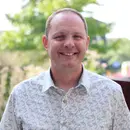
What does your voice give away before you've finished a sentence? Dr. Larry Barsh talks with Dr. Chris Montgomery, a dialectologist at the University of Sheffield, about the verdicts we reach in half a second — educated or backward, polished or rough, one of us or not from around here — and why nobody believes they have an accent.
Montgomery leads the UK Swear Map, a national survey of how Britain actually curses, built in partnership with the satirical arts collective Modern Toss (creators of the push-button "periodic table of swearing"). From the Portsmouth insult "din low" to the predictable ways listeners rate northern English speakers as friendlier and southern speakers as more competent, the conversation traces how language signals belonging, class, and power.
Then it turns to the present moment: a U.S. president whose public profanity has climbed from roughly 40% of speeches to the low 90s, what that swearing performs for its audience, and whether it shifts the Overton window of acceptable public speech. The episode closes on AI — voices scrubbed of accent and profanity, the uncanny valley of a synthetic regional Siri, the loneliness epidemic, and why face-to-face conversation matters more than ever.
Topics covered
- Why everyone thinks they're the one without an accent
- The half-second sorting: competence vs. warmth
- The UK Swear Map and the two classes of regional cursing
- Modern Toss and the periodic table of swearing
- Presidential profanity as authenticity, transgression, and spectacle
- Profanity and the Overton window of public discourse
- AI voices, the uncanny valley, and accent erasure
- Regulation, children, and unregulated online spaces
Guest: Dr. Chris Montgomery, University of Sheffield.
The Swear Map is expected to go live in autumn 2026 — find his recent papers via the University of Sheffield website.
Summary
A linguist who studies how Britain swears joins The Enlightened Cynic to explain a quieter truth underneath the profanity: we judge each other constantly by sound, in a fraction of a second, and we almost never notice we're doing it. The conversation runs from hyperlocal insults nobody outside one city understands, through what presidential cursing actually performs for a polarized audience, to the irony that AI voices strip out the very vernacular richness that makes us human — and why that should worry us more than any swear word.
Sponsorship and advertising opportunities are available on Specifically for Seniors. To inquire about details, please contact us at https://www.specificallyforseniors.com/contact/ .
Disclaimer: AI Generated Transcript
Larry (00:06):
Welcome to the Enlightened Cynic. This is a space for those who have seen enough to be skeptical, but curious enough to keep asking why we skipped the platitudes and dive straight into the social, political, and cultural currents that actually shape our lives. No fluff, no filters, just hard won realism. Let's get into it.
Larry (00:41):
Welcome to the Enlightened Cynic, I'm Dr. Larry Barsh. Most of us assume we speak a neutral language that everyone else has the accent. My guest has spent his career showing how wrong that is. Dr. Chris Montgomery is a dialect at the University of Sheffield in South Yorkshire, England. And his real subject isn't what language is, but what we believe it means. The verdict you reach about a half a second before you thought anything, whether the speaker is educated or backward, polished or rough, one of us, or not from around here. But what makes Chris unusual is where he points that lens. He leads the United Kingdom Square map a national consensus of how Britain actually curses. I ask them here, because everything this show choose on class, belonging power, and the machines we've built to talk back to us, runs through how we hear one another. And here in the States, we're in a strange moment for it. A president who's made profanity routine. In a way no other president ever has the reflexes, the clutch pearls, or the cheer. I'd rather understand it. Chris Montgomery, welcome to the Enlightened Cynic.
Chris Montgomery (02:20):
It's good to be here.
Larry (02:23):
A lot of my listeners met your work through that New York Times article. Hey, bam, pot. Can you tell Real British insults from fakes? Most of us flunk the test completely because the real ones sound like gibberish to us as much as the gibberish ones do. So stop me there. What does it tell you that a word can be instantly loaded for one person and pure gibberish for another?
Chris Montgomery (02:58):
Well, I, I, I mean, this is, this is the fascinating thing about, about language. So we have very particular ways in which we might use words or phrases in specific locations. And they, they, they may be just very, very meaningful in those places or in those spaces and not at all meaningful elsewhere. And this is a it's a, it's a facet of language. It's a facet of language that certain expressions, certain ways of talking, certain words, indeed might just not carry those same those same important social meanings for people outside a community that they do within a community. So when you are thinking about certain words for <laugh> seeming like gibberish and, and certain words perhaps being a little bit more familiar to you, but, but used in a, in a slightly different way, this is how language works all the time, perhaps sometimes more subtly than words.
Chris Montgomery (04:00):
So certain sounds might carry a particular connotation within a particular social group, within a particular, in a particular social setting that just don't have that same meaning outside of those, even if they're sounds that we sort of use all the time. So I think this speaks to this very sort of fundamental nature of language. That it's not just a way of, of communicating facts about things, but it's way of communicating something about us, something about the groups we belong to, that the the the ways in which we want to be seen in the world. So not just asking somebody to close a door, for example, that's a use of language, but but, but the, the, the way in which we say that tells us something about the person we are, the group we belong to, and perhaps also who we're speaking to
Larry (04:53):
Whose voice gets to count as having no accent. I mean, we <laugh> I sort of touched on that when we were chatting before we got started, but I feel I don't have an accent, and it's definitely a Boston accent <laugh>. How, how do we, how do we decide that
Chris Montgomery (05:16):
<Laugh>? Well, of course, I don't have an accent either. <Laugh> no, but this is what we think, right? So thi this is until we start encountering other people, this idea about accent difference isn't necessarily that important. It's only when we start perhaps moving outside of the area in which we grow up or perhaps start experiencing neighborhoods within the areas in which we grow up, that we start to, we start to work out that that crucially though, that other people have the accent. So I don't have the accent. Other people have the accent, but of course, they think the exact same thing about you, about about me. So this idea that, that, that one has oneself a a neutral accent and everybody else is sort of divergent or, or strange, or or ha has an accent, is a really, really common a common experience.
Chris Montgomery (06:15):
And it's only when we start moving outside our groups, when we start, we start maturing sort of sort of socio linguistically to, for a technical term. So we start realizing the value of accents. We start realizing that we can tell stuff about people from the way in which they use language. It's only at that point that we start perhaps thinking, oh, hang on a second. Maybe I also have an accent. And, you know, this is when I meet my undergraduates in, in the first year of their university degrees. Many of them still come with this this idea. Well, no, I've got the neutral accent. And, and, and other people are, you know, other people have an accent. So this is something that, that, that stays with people for, you know, for a long time, even when they're really interested in, in linguistics as a subject,
Larry (07:06):
How we do this unconsciously. How do we sort people by how they sound to us?
Chris Montgomery (07:17):
Well, this is really interesting, a a as well, because it people are really quite predictable <laugh> about the ways in which they do that sorting. So I can, in, in a UK context, I, I, and I'm sure it'd be similar in, in, in the States, but I'm slightly less familiar with quite how that would work. But I could play a, a voice sample of somebody reading a, a short story the, the boy who cried wolf for something I could play a a, a, a recording of somebody from the north of England and a recording of somebody from the south of England to a group of non-specialists. And I could really, with, with great certainty, predict that if I asked them questions about the intelligence of the speaker or the, the, the, the, the professionalism of a speaker that they would rate that Southern British English speaker as as more competent, as more professional.
Chris Montgomery (08:20):
But if I asked them questions about whether somebody was trustworthy or friendly, I could, I could predict with quite a high degree of certainty that they would rate the Northern English speaker as, as being more friendly, as being more trustworthy. So these are really predictable reactions that we get, and also incredibly quick classifications that, that people make. And the truth is in relation to the particular things that people are picking up on to make those classifications, there's still a huge amount of research that needs to be done because we are not quite sure what it is that people are, are picking up on. Is it a specific accent feature, for example? Or is it just lots of subtle cues that, that people are drawing on to make these very predictable these very predictable sort of reactions in, in sort of quasi experimental settings. That's what my research as well as the swear map, that's what some of my research is looking at. What is it that people are picking up on that says, oh, well, that this, this guest you have on your show is, is British, you know, what, what are, what are people picking up on that are enabling them to, with, with quite a high degree of certainty say that I'm British you know, whatever they think about my intelligence or friendliness or whatever.
Larry (09:45):
So why a swear map? <Laugh>, you collect local insults that don't really register with me, Marty, ACE, DLow, glyco this doesn't mean anything to me as a United States born and bred but it's loaded with place for the people who were raised. Then w why does a word work in one, one place and not another?
Chris Montgomery (10:26):
Well, this is, you know this is, you know, part of, part of language, certain things, certain ways of naming things are gonna work in one place and not in another. And, and people who study dialect, ology ha have been interested in these sorts of things for hundreds of years. What does that, you know, what, what is the regional word for this farming implement for, for example, now, the, the swear map is a sort of twist on, on this sort of regional language idea that the idea that we do have, you know, local words and phrases, why do people use them? Well, I think in some cases it could go back to what we were speaking about earlier, when people say, oh, I have a neutral accent. People may use these terms. You know, din low is a term used in the, the southern city of, of Portsmouth.
Chris Montgomery (11:15):
So that's on the south coast of England. This is a term that I had never heard before either. But it's a really widely used term within Portsmouth, simply to mean idiot. And this is something that's passed down from generation to generation. It's used in certain social groups, and only when people sort of start using, use the term in Southampton, which is very close to Portsmouth you know, very close even in an English sense, but, but practically next to each other in a, in a United States sense, I'm sure only when they go to Southampton and use the term does it mark them out as somebody from Portsmouth. And then there's a great deal of rivalry there. So these terms are often used because people don't know necessarily that they've not got wider currency, okay? That they are terms, that are passed down terms that, that that are, are just local to the area.
Chris Montgomery (12:09):
People don't realize they're not local until they leave the era or use it in a context in which they've got other people around them. Then the interesting thing might happen, people might sort of move away from using that term, or they may want to use it as a way of asserting their identity. They may want to say, well, I'm a proud person from Portsmouth for this din low example. And I want to, I want people to know that, so I'm going to use that, and I'm going to have people meet me with confusion so I can explain, oh, this is, this is from, this is a term used from where I'm from, and it's, it's really useful. And, and everybody knows it there. And so it's a way of sort of positing identity. And again, this is, you know, similar to all other form, well, many other forms of language, many other ways of saying things, words that you might use, grammatical constructions that you might use particular accent feature that you might have.
Chris Montgomery (13:08):
It might be really useful for you to deploy it to demonstrate that you, you are part of the outgroup that you are proud perhaps, of being where you are from. So there are a couple of reasons why people might use words that perhaps don't have a great currency elsewhere. They might use them simply because they're unaware that they are local terms, local to themselves or they may use them because they're quite aware <laugh> that they are that they don't have that wider currency. And actually they're useful for, for portraying a, a particular identity, especially if we come to swear words. These things might be quite embedded in the way in which people use language. And, and it might take a bit more processing time to, to call somebody something other than dilo, for example, and the moment may have passed. So there's perhaps a sort of processing Go ahead, say,
Larry (14:01):
Go ahead, say it, <laugh> with the dealing with adults here. So it's not necessarily a swear words swear word, but it's a local vernacular expression that identifies where someone is from.
Chris Montgomery (14:23):
It can do. And with the swear map, the, the, the data that we've collected, what we found is there seems to be sort of two main classes. I I think of the, of, of the words that people have provided. One are those idiot terms. So just terms for, for idiots that, that are, that are really hyperlocal, that that, that do seem to be used. And you gave some examples of those earlier. Others are sort of taboo terms profanities that are quite high up the sort of profanity scale <laugh> that, that, that we all know, right? So so, so the the, the f word, the C word, I'm very happy to say to them, if you want me to but, but being used in really quite inventive ways. So sort of being used as multi word compounds or, or having an interesting ethics on the end of the of the word to do particular things.
Chris Montgomery (15:20):
So people being really quite inventive with the way in which they're using these rather more sort of standard, quite quite taboo terms, but using them in an inventive, in a playful way, in some respects. And they may be more sort of within, within friendship groups, within sort of certain social circles, perhaps within particular communities that might be less geographically bounded, you know, internet communities and stuff like that. That's what we need to sort of probe a little bit further now. So what we've done is we've collected thousands of terms from hundreds of respondents across England Scotland, Wales, and Northern Ireland. And what we need to do now is, is, is really get into the, the details of what people have given us and look at just how widespread these are. But these are the main classes, the idiot terms, which seem to be really local, and then the, the creative uses of more widespread terms that, that seem to perhaps be playful signaling particular emotion, particular particular social situations.
Larry (16:27):
And then we get into another website called Modern Toss.
Chris Montgomery (16:35):
Yes.
Larry (16:38):
The signature piece is a periodic table of swearing, push button <laugh>.
Chris Montgomery (16:45):
Yeah, <laugh>.
Larry (16:47):
Describe that a little bit for me. <Laugh>.
Chris Montgomery (16:50):
Well, modern Toss are a they're a, a stereotypical arts organization, and they've been going for 20 years or so. And they're, they're really interested in profanity. They're really interested in swearing. They've sort of got a, a, a, a really interesting take on modern life in particular, sort of office life as well. And so they, they had a couple of TV shows on a, a, a, a national network here, channel four decade or so ago. Lots of the sketches on those were sort of swearing, lead <laugh> and they produced cartoons and artwork for, for a range of magazines and websites. All of them sort of commenting in a satirical way on, on, on Modern Life, as you say. They, they also, I think in around 20 10, 20 11 created a periodic table of swearing, sort of taking on their, their interest in swearing.
Chris Montgomery (17:47):
And so it's laid out a, a as the periodic table of the elements, but we've got our, and, and a similar sort of classifications of swear words, you know, going from rather more benign things to rather more the heavy elements. I think they, they call them. And yeah, I've seen this in action. So I've seen this on their retrospective exhibition last year, the, the, the whole periodic table, the the push button interface, and, and people having taking great delight in pushing these buttons and having this installation swear back at them. And apparently the actor who recorded the swear words was delighted to have done it as well. So, modern toss are, are, are really interested in swearing, really interested in the, in the sort of delight and interest that people have in these terms. That the, the fact that they are sort of outside the norm, they are a, a, a, a bit naughty and, and rude and, and and, you know, people do engage with that sort of thing.
Chris Montgomery (18:46):
So they approached the University of Sheffield sort of around the point at which they were doing this exhibition because they were touring it around the country. And I think they got, they got a sense that actually as they were moving from place to place, people were interacting with this in slightly different ways, and they started to realize there might be a sort of regional dimension to swearing. So they approached us at the University of Sheffield and, and me in particular because of my background in dialect ology, so in how people use language in, in local areas, and asked, you know, is there anything in this? Is there, is there a, is there a potential project here? And I, and I thought, well, yes, there, there may well be, because there has not been anything like this done in the uk before. And so together with, with modern Toss, we, we launched this, this swear map and, and involved my undergraduate students in it as well.
Chris Montgomery (19:39):
So they were collecting some data for us. They were, they were working with some of the data that we had and producing some findings guides for modern toss. This has been a real a real partnership between me at the University of Sheffield modern toss as this as the, the, the arts organization who has this artistic interest in swearing. And also my undergraduate students who had a great deal of fun collecting data, looking at the terms and, and producing some some findings to, to, to send back to modern tasks.
Larry (20:11):
I sort of wish we had a, a similar function in the United States. It would be fun to have.
Chris Montgomery (20:21):
Yeah.
Larry (20:24):
On a serious note, our current president, in his first term profanity, showed up about 40% of the time in his speeches, and now 93, 90 4% of the time, aside from whether that's shocking or bad or whatever, what is the swearing doing? What's it telling his audience?
Chris Montgomery (21:00):
Yeah, I mean, this is really interesting, and I think this, I think you're sort of citing the Washington Post article from, from earlier in this year when they, they'd done this analysis and, and, and really interesting. And yeah, I suppose I, I think what, what I'd say to, to start off with is that, is that it, it, it's not that no other presence has ever has ever sworn, but I, I think you're talking here about the, the public use of, of swearing the public. Yeah, yeah. And so, and, and in terms of what that's, that's doing, I think there's, there are a number of things that, that might be doing. And I think that whenever we whenever we speak we are speaking to a particular audience, okay? And that's not just when we're on stage doing A-A-A-A-A rally speech or performing a presidential address, we're, we're constantly tailoring what we do to the audience that we are we are communicating with.
Chris Montgomery (22:10):
And so with your current president, there is a particular audience for his speeches. You know, that, that I think it's perhaps safe to say from a, from a distance from across the Atlantic that, that the United States feels particularly polarized. And so there's a particular audience for your president's public utterances. And what that audience seems to prize a above all else is that sense of authenticity, that sense of not being a, a conventional politician. That, that the sense of a sort of shared transgression that both the speaker and the audience are breaking the rules together. The, the o the other. The other thing is that it, it, it does create a response. It does turn the, the speech, the politics into a, a particular spectacle. So I, I think there's authenticity there, the performance of authenticity, whether we believe it's authentic or not, there's a, a performance of that.
Chris Montgomery (23:30):
There's that shared transgression turning it into a spectacle. And also it, it seems to help to identify enemies in the public utterances. So making that speech targeted. So I, I think that there are a number of things going on, but I think it's important to, to sort of stress that there seems to be being done for a particular audience that appreciates language being used in, in that way. So in, in, with your president's, current president's in your current president's case, it, it, it sort of depends on the idea that the sort of conventional way of doing politics isn't working, is, is fake, is is broken. So using swearing, using profanity seems to be used to provide evidence of, of, of a, a particular version of the, of the truth.
Larry (24:40):
Is it an attempt to be part of a group or a recognition of a group's feeling in general?
Chris Montgomery (24:53):
I think that that is certainly possible that it's a that it's, that it's it's signaling group membership signaling, group belonging, and that's what we do with language all the time, right? So that, you know, my, when we were talking about slightly less serious issues earlier, the way in which we use language is a, a powerful way of asserting our identity of, of, of, of staking out a particular claim to be a particular type of person. And so it, it should be no surprise that a that, that, that, that a president would, would want to do that. Now, in previous years with previous presidents, there may have been a sense that there's a, a greater number of people to play for in terms of that shared identity in a highly polarized political setting where half the people have sort of switched off already. I think there's probably an even more important role for signaling that you are still one of one, one of us <laugh>. Because you, you, you need to maximize the, the electoral returns from the smaller pool that you have. I, I think, I mean, I'm not a political scientist at all. I, I observe politics from a, from a distance, so I have some knowledge, but sort of linguistically it would, it would strike me that, that that
Chris Montgomery (26:28):
Portraying oneself as a, as a normal person inverted, who speaks in normal ways, who doesn't speak as traditional politicians speak, I think is particularly useful for a certain section of the, of the population. And we see it with, we see it when Trump sort of vent causes other people civil servants or other politicians, he, he sort of stands up and puts his head back and, and talks with a, a, a different accent and says, oh, sir, you told me not. They, they said, don't do this. Mm-Hmm. You know, you, you see that quite a lot. Trump sort of othering people using a different voice essentially. And that's, that, that's him sort of making explicit. I'm not that I, I am, I'm, I'm this,
Larry (27:17):
I'm, I'm, I'm, I may be a billionaire who has no interest in you, but I'm really one of you sort of thing.
Chris Montgomery (27:26):
Well, this is the, I I mean, this is the, this is the irony, right? <Laugh> and, and we see it in the UK as well. We have populist politicians in the UK who have a life very far removed from the majority of, of the population of the country, but yet seem to be able to talk in a particular way that will that, that, that, that makes them appear. One of, one of us, you know, one, one of the, one of the population when the actual fact of the matter are that they're, that they're, they're quite far removed from that.
Larry (28:04):
What, what does it do to the language, to the public's use of language when a president sort of breaks down the usual manner of speech of previous presidents, something called the Overed window?
Chris Montgomery (28:33):
Well, I, I, I think that it, it's it inevitably changes the expectations around the office around public discourse. It's, it, it does probably license other people to use similar language. So Hakeem Jeffries earlier in the responding to the the racist video of the Obamas used the F word. So, and what everyone thinks of that, that, that, that, that, that, that happened. And so it, it would, it would likely, the, the, the result is that the, the acceptable language, the acceptable use of language i I is, is broadened to, to a certain extent, to include those profanities. Having said that what I said earlier about the language being targeted to particular groups, to specific groups to demonstrate affinity with, with, with a particular group, might mean that this, this perhaps is, is that, that perhaps that that sort of overton window in terms of, in terms of language use might not move too far towards the, the, the profane, because I think there is an acknowledgement, I think, widely that your current president is a, is a particular person.
Chris Montgomery (30:03):
It is. And what we may see i, is that when there's a, a new office holder in the role of, of presidents, that that things may revert slightly. So I, so I think there are, that there's a possibility that that moves the Overton window quite away to the, the, the, the wide scale normalization of, of profanity and political discourse. That's a possibility. Another possibility is that it perhaps does become a little more common but that the particular president that you have now is a particular instance of a, a, a particular type of person that, that, that, that, that, that, that may not recur.
Larry (30:55):
Yeah, I, I did, I just wonder how it affects kids, children.
Chris Montgomery (31:03):
Well, I mean, this is a, I think
Larry (31:05):
The, the, the president said it. Why can't I?
Chris Montgomery (31:10):
Well, I, I mean, there, there, there, there definitely is that, and, and I think what's I, I, I think part of <laugh>, part of the way in which we might educate children around language use, and of course, children know swearing exists, right? So, you know, that that's what my high school of English teacher told me was a dictionary, was for, to look up rude words. So <laugh> <laugh> so of course, and, and of course, you know, we all know when we first find out about swear words that they're, they're funny and they're, they're illicit. And you know, that they're, that they're something that, that, that people find that people have a, an interest in.
Chris Montgomery (31:52):
I think that, that the, the, the key to helping children to, to understand swearing is to talk about it, the, the social functions of language. There are points in which, you know, swearing is perfectly acceptable. There are other places in which swearing is much less acceptable. And I, you know, I i, I, I wouldn't be too concerned about my own daughter hearing a politician swearing because she's aware that swear words exist and, and she is, is, is aware of the, the correct places in which to, to use those terms. I mean, she is the daughter of two linguists, so you would hope she would, but I think there's a wider point about, about educating children, about all forms of language that, that, that they're going to encounter all forms of language. And there is a, there's a particular effectiveness of, of swearing in particular social situations, in particular circumstances.
Chris Montgomery (33:00):
And I think there is a, there is potentially a danger that the overuse diminishes their effectiveness. And I think a, a a a a discussion with children about that, I think is probably quite productive, I think pretending they don't know what the swear words are, you're on a hiding to nothing. But I, I, I can see that the point that, you know, this president does it well, why shouldn't I? Well, I, I, you know, one might say, do you want to be like the president <laugh> in this, in this particular circumstance?
Larry (33:33):
Well, you brought up two points. Why look up swearing where you could just push a button <laugh> on a periodic table? And the, the overuse that seems to have developed into a lot of comedy routines, an occasional swear word is effective in comedy, but the repetition of the same word over and over just kills the routine's ability to produce a laugh.
Chris Montgomery (34:09):
I mean, I think that, that that's potentially the case. I mean, there's a, there's a very famous comedian called Billy Connolly who Scottish comedian in, in the uk I think now lives in the, in the States actually. But, but was, was, doesn't perform anymore but, but was, you know, consistently bought up for, you know, for, for swearing and the profanity of his routines. And I, some of the, some of the swearing in that was very, was in his routines is, is extremely is extremely effective, and there is a lot of it. But there's a, but, but the, the, the joke isn't the swearing. The swearing is sort of incidental. The swearing is part of, of, hi, he's from Glasgow, who's a ship builder at, at one stage. He, he's, it's part of his persona. It's part of the, the, you know, his, his everyday language. And part of the humor is the authenticity. I dunno which specific comedian c you know, comedians you're thinking of or comedy routines you're thinking of. But I, I think, go back to that point that I think as with a lot of things, you know, judicious use of, of particular ways of expressing oneself is perhaps, likely to make them more effective.
Larry (35:23):
Which brings us back to one point I wanted to talk to you about. And that's dialects and artificial intelligence systems are trained to be polite right now, profanity, scrubbed the, there's a proper register as the one that the AI voices use. Isn't that ironic that AI suppresses the very vernacularly a swear map tries to preserve?
Chris Montgomery (36:04):
I, I, it, it certainly is ironic. And, and I think, you know, we were talking in our academic department just this week about AI and, and it's sort of flattening out students' authentic voice. So not, obviously we wouldn't expect <laugh>, we wouldn't expect them to be swearing in, in the essays they submit to us, but certainly I ai and you know, that that student work is quite detectable because it does seem to, to remove that, that that individuality of the student's essay, the, their individual creativity, you are right as well, that the AI training data tends tends not to include swearing or, or, or profanity. And so certainly what, what an ai chat bot will will produce a generative AI model, will produce, is likely to be a, a is, is likely to have a particular style.
Chris Montgomery (37:05):
And that style is, is is likely to be similar from person to person in a, you know, in, in a way that, that the style differs between, you know, between, between different people. When it comes to the, the swearing, what we're really, what, you know, what the swear map really is trying to capture is the, is the language that people use in every day speech when they're talking to each other when they're not on their on their chat GPT app on their phone. You know, the, what we're trying to do is preserve the stuff that people are, are actually using in their everyday lives. And in that respect, it's really similar to the sorts of types of dialect allergy study that, that, that happened in the past where what people were really interested in, it was the language that they were using in their local communities to describe particular terms.
Chris Montgomery (37:59):
So it's very similar to that. So what we're interested in is what people are doing when they're talking to each other, when they're communicating with each other, not when they're communicating with a, a, a, a, gen ai chat bot we're in. And, and that is what we're interested in. So there is an irony there that we've got a, a new language technology that people are, are using in a, in a very widespread fashion that's producing a particular type of output. And we are trying to sort of say, <laugh>, what are people doing when they're talking to each other? But I think that's the, that's the crux. We that this project is interested in that person to person interaction, that, that, that stuff that we do all the time, which is, is, is so important and increasingly so increasingly important that people talk to each other, that they have face-to-face communications with each other. There's an epidemic of loneliness amongst young people. And I, I, and I, I don't think it's, it's a coincidence that that's coincided with the rise of social media and, and now potentially AI chatbots as well.
Larry (39:03):
And with the AI chat box, the accents are scrubbed, and when they're re-added, there's something about the accent that makes it even sound less human.
Chris Montgomery (39:21):
The <laugh>. This, this is interesting. I, I I had a, a student work on a project a year ago with me on, on, on how people react what they, what their perceptions are of, of a, of AI produced voices. And and, and she let me know, there's actually a northern English version of, of Siri, which I, then, I was
Larry (39:44):
To say that
Chris Montgomery (39:46):
I then set it set, set my, set my Siri to be the Northern English woman that she, she told me about. And it <laugh> it feels it feels a bit more you know, feels a bit less strange. But again, it, there is a, it, it, it, it doesn't feel quite natural, and of course it's not. And so there's this uncanny valley effect that you have where something is just not quite right, something's a little bit off. And especially when something is trying to simulate a particular accent, what, what it's going to do is it's probably going to pick up on some sort of highly salient, you know, accent features to use and, and, and cut out some things that are perhaps less obvious. And it's that sort of richness and texture of the human voice and the way in which a human communicates that an AI voice perhaps misses out on, which is perhaps the reason for it, for people feeling like it's there, but it's not quite there. And that makes people feel a little uneasy. I think
Larry (40:55):
When do we lose that, though? We've lost it in the ability to distinguish a real photograph from a, a, an AI generated photograph. So it's an assumption that we're gonna lose the ability to distinguish in our official voice from human voice.
Chris Montgomery (41:21):
That is a potential risk. It's a potential, you know, that is potentially something that, that will happen. You know, that, that the example that you give of a photograph is, is, is good. I mean, some, some AI generated photographs are, are, are, are more realistic than others. Thinking back to your current president, again, <laugh>
Larry (41:42):
Flying, flying a jet over a city? Yeah,
Chris Montgomery (41:45):
Potentially, or, or, or, or the, or the doctor image depending on your perspective. Yeah. So, so certain things are more but obviously there are other photographs that look perfectly plausible that, that don't have a, you know, a an 80-year-old man flying a fighter jet over a city. So there, there is an issue there. And I think when thinking about, you know, voice again, and, and, and losing that ability to, to discriminate and to distinguish between an AI generated voice and a human generated voice, that could become an issue. Now, one of the ways in which this is already being used is, is in is in sort of frontline councils in the uk for example where there are companies that are, are, are using AI conversation agents. And I've done some work with an AI company around accents in that respect to, to, to sort of screen calls and put people in the, to get people in possession of the right information.
Chris Montgomery (42:52):
Now, at the start of each of those conversations, and I think it's an EU regulation, there needs to be a disclaimer saying you are gonna be talking to an AI agent. And so I think there is perhaps a need a a around making people aware of who or what they are talking to, communicating with, as well as a need more generally in society, for people to simply have more conversations with each other, to talk to each other, to go and, and, and go to social events with each other, to, to go and have a cup of coffee or go to the pub and, and speak to people in face-to-face conversation with face-to-face communication keeping language alive and, and, and being able to be able to understand the richness of conversation, understand the richness of the diversity of people's views and opinions. So exposing ourselves more to people, I think is is something that I is, is as important as it ever was.
Larry (43:56):
And I think that points out one of the dangers of quote unquote conversations with AI when, when you turn on the microphone, as opposed to typing in the question you want to quote unquote discuss. And I worry about some of the stories about kids having conversations with an AI that leads to suicide and other possible dangerous.
Chris Montgomery (44:37):
I, I, I think, you know, unregulated online spaces can be particularly dangerous for children. We, we've seen that in the uk. There are moves to ban all social media for children under the age of 16 in the uk whether that happens or not, because we're gonna have a new Prime minister, I don't know. But there, you know, that's already happened in Australia, and that's, that's not particularly about bots or, you know, a gen ai conversational tools or platforms. But these unregulated spaces in which lonely, anxious people might find themselves, I think are, are, are, are potentially dangerous. This isn't the point about, about language it, and again, I'm an expert on language and not sort of social policy or, or, or anything like that, but it, it would strike me. There's some responsibility that needs to be exercised by people who provide platforms to ensure that there are that, you know, in a, you know, AI conversation, if that starts going down a particular route, that there are, you know, that there are automatically sources of help and support flagged that that, that there are some safeguards built into those those systems.
Chris Montgomery (46:05):
I don't know of any specific cases about you know, about ai and and, and, and, and this particular outcome. But I certainly know, you know, in the social media landscape, there has certainly been un unfortunate deaths of of, of young people as a result of social media well, seemingly as a result of social media content. And, and again, I think these unregulated spaces can be dangerous for for younger people.
Larry (46:35):
And I worry about regulation as well, especially in the face of our current administration. Where can people find your work? Is the swear map available? Would it mean anything to American audience?
Chris Montgomery (46:54):
Well, the swear map isn't yet available. We've got the, we've got had the data collection phase. We're gonna spend some more time looking through the data and and getting that on its feet. People can find my work by going to the University of Sheffield's webpage and, and typing my name in that, you'll find my website there. So I'm Chris Montgomery the University of Sheffield. So I have a webpage there that gives all my recent recent papers and hopefully by sort of autumn this year, there'll be a link to a a, a swear map artifact that we can, that you can have a look at and, and see, and see where all the gibberish is spoken in the uk
Larry (47:36):
<Laugh> you wanna make one in the United States?
Chris Montgomery (47:40):
Well, I, I, I'd be delighted to. Yeah, I, I think I, I've, you know, I've no idea what the swearing's like in the United States, but if, if it's anything like in the, in the uk, it'll be inventive and and interesting and and, and in some cases very funny.
Larry (47:58):
If you want to know, just turn on our news item, <laugh> News broadcast <laugh>. Chris, this has been fun. It's been educational. I, I started the hour having to look up BAM pod. I am convinced that's the whole point. None of us is ever really quite done learning how everybody else talks. Chris Montgomery, thank you for the lesson.
Chris Montgomery (48:32):
Thanks for having me.
Larry (48:35):
That's our show for today, and we're glad you were part of the conversation. If you enjoyed what you heard, hit subscribe and share it with a friend, a family member who'd appreciate a little sharp thinking and hard earned perspective. Until next time, I'm Larry Barsch reminding you that experience matters, perspective is earned, and this conversation is just getting started. The enlightened cynic. Take care, everyone.

Senior Lecturer in Dialectology
Dr Chris Montgomery is a Senior Lecturer in Dialectology at the University of Sheffield, where he researches how people perceive, interpret, and react to different accents and dialects. His work explores what regional speech means to ordinary listeners, how people make judgements about voices, and how language connects with place, identity, class, culture, and belonging.
Chris has developed new methods for studying accent perception in real time, including approaches that track which specific features of speech listeners notice as they hear them. His research has focused particularly on the north of England and southern Scotland, and he has a long-standing interest in folk linguistics, language attitudes, and the social meanings attached to accent and dialect.
He is currently involved in projects on dialects and artificial intelligence, including work with ICS on how AI systems engage with regional speech and linguistic diversity. He also leads the UK Swear Map project, which explores regional swearing, taboo language, slang, offensiveness, and the ways people use colourful language to express identity, humour, anger, intimacy, and belonging.
Across his work, Chris is interested in what everyday ideas about language can tell us about wider social life, from regional pride and prejudice to the ways technology, culture, and politics shape how we hear one another.


