May 30, 2026

Failure to Treat: What American Medicine Won't Admit with Peter Kowey, MD
Apple Podcasts podcast player badge
Spotify podcast player badge
YouTube podcast player badge
Castro podcast player badge
RSS Feed podcast player badge
Amazon Music podcast player badge
iHeartRadio podcast player badge
Apple Podcasts podcast player iconSpotify podcast player iconYouTube podcast player iconCastro podcast player iconRSS Feed podcast player iconAmazon Music podcast player iconiHeartRadio podcast player icon

There is a particular kind of authority that comes only from having been inside something for fifty years — from having seen it at its best, trained its practitioners, published its science, and then watched it hollow itself out from within.

Dr. Peter Kowey has that authority. He holds the William Wickoff Smith Chair in Cardiovascular Research at the Lankenau Institute for Medical Research, is a professor of medicine and clinical pharmacology at Thomas Jefferson University, and spent years as chief of cardiovascular diseases at the Lankenau Heart Institute. He has published more than 450 scientific papers, trained hundreds of cardiology fellows, and served on FDA advisory panels. He has also, in the past several years, become someone who cannot stay quiet.

His new book, Failure to Treat: How a Broken Healthcare System Puts Patients and Providers at Risk, is built from twenty short stories — each a fusion of real composite cases, each naming a different fracture in American medicine. Fragmented care with no coordinating physician. An electronic medical record redesigned to serve billing rather than patients. Defensive medicine that orders unnecessary tests because the malpractice system makes not ordering them dangerous. Private equity that purchases hospitals to strip and sell them. Primary care physicians asked to address four chronic conditions, review a medication list, conduct an exam, and dictate a note — in ten minutes.

The book was born from a charge. Kowey's mentor was Dr. Bernard Lown: Nobel Peace Prize laureate, inventor of the defibrillator, one of the most morally serious physicians of the twentieth century. When Lown himself became a patient near the end of his long life, he encountered fragmented care, indifferent nurses, and cavalier doctors. He lived to 99, but not easily. In the years before his death, he told Kowey: "I'm really relying on you to try to do something about this."

In this conversation, Kowey does not soften the diagnosis. The current administration, he says, has taken a broken system and made it exponentially worse: NIH funding running at half last year's levels, the CDC's expert panels cleared of independent scientists, vaccine skepticism in positions of authority, and cuts to Medicaid, Medicare, and veterans' healthcare that will take years to repair even if reversed tomorrow. He is blunt about what the fix requires: universal coverage, a salaried physician model, restored professional status for nurses, and loan relief tied to primary care service.

He also holds out something harder to sustain than outrage: genuine hope. The people who go into medicine still go into it to help. That instinct, he believes, will outlast the systems that are trying to exploit it. T

he book is available on Amazon and wherever books are sold.

Website: peterkoweyauthor.com

In this episode:

Why fragmentation of care is the single most dangerous feature of modern American medicine

How the electronic medical record became an instrument of billing rather than care

Defensive medicine, malpractice reform, and the billions they cost

Private equity in healthcare and the creation of hospital deserts

The ten-minute primary care visit and why physicians are leaving the field

Direct-to-consumer drug advertising: the United States and New Zealand against the world

NIH, CDC, vaccines, and the public health erosion under the current administration

The case for universal healthcare — and what getting there actually requires

Sponsorship and advertising opportunities are available on Specifically for Seniors. To inquire about details, please contact us at https://www.specificallyforseniors.com/contact/ . 

Transcript

Disclaimer: Unedited AI Transcript


Larry Barsh(0:05):Welcome to the Enlightened Cynic. I'm your host, Doctor Larry Barsh. This is a space for those who have seen enough to be skeptical, but curious enough to keep asking why.

Larry Barsh (0:22): We skip the platitudes and dive straight into the social, political and cultural currents that actually shape our lives. No fluff, no filters, just hard won realism. Let's get into it. Welcome to the Enlightened Cynic. 

Larry Barsh (0:46):

Our guest today spent fifty years inside American medicine, and then he wrote the book that says what most physicians think, but few dare say out loud. His mentor was Doctor. Bernard Lown, Nobel Peace Prize laureate, inventor of the defibrillator, and one of the most compassionate physicians of the twentieth century. When Lown himself became a patient near the end of his life, he encountered what he encountered was fragmented care, indifferent nurses, cavalier doctors.

Larry Barsh (1:30): The man who had spent a lifetime demanding that medicine remember its purpose died having watched it forget. That experience sent Doctor Peter Kowey to his desk. Doctor Kowey holds the William Wickoff Smith Chair in Cardiovascular Research at the Lankanau Institute for Medical Research.

Larry Barsh (1:56): He is a professor of medicine and clinical pharmacology at Thomas Jefferson University, and spent years as chief of cardiovascular diseases at the Lankenau Heart Institute. He has published more than four fifty scientific papers, trained hundreds of cardiology fellows, developed treatments still in use today, and served on FDA advisory panels. He's earned every credential medicine can bestow. He's also a novelist, which may explain why, when he finally decided to make his case, he did it in stories. The result is failure to treat: how a broken healthcare system puts patients and providers at risk.

Larry Barsh (2:52): Today he makes that case here. Welcome to the Enlightened Cynic, Peter.

Peter Kowey (2:57): Larry, thank you for that wonderful introduction.

Larry Barsh (3:01): It was easy today. The title of the book, Failure to Treat, is a type of medical malpractice that you chose specifically. Why did you choose this title?

Peter Kowey (3:16): It was a difficult decision, and I had a lot of help with it from my editors and publicists. But the main purpose was not only to reach practitioners, but perhaps even more importantly, reach the patient public. And we wanted to make sure that people understood that we were coming at this from the point of view of, yes, professionals, but professionals who clearly understood the plight of the patient and what the patient was facing in our society trying to get good medical care.

Larry Barsh (3:53): You dedicated the book to your mentor, Doctor Lown, who spent his life advocating for compassionate medicine, and then the suffering he went through at the end of his own life. What did he talk to you about in the months preceding his passing?

Peter Kowey (4:15): I I met with him several times in those last years and spent some very high quality time with him in his home where we were able to relax and chat. You're absolutely right, Larry. It's an amazing irony that this man who dedicated his entire life to trying to bring humane care to patients himself did not get the same kind of care that wanted he would or recommended. He had some gastrointestinal illnesses. He had a number of illnesses.

Peter Kowey (4:53): He lived, by the way, to the age of 99. So he had a very full life, but unfortunately the end was difficult. And we sat and talked and he said to me, and he said it very blatantly, Peter, I'm really relying on you to try to do something about this. I really want you to try to help. And we didn't specifically talk about a book or a book of stories or anything.

Peter Kowey (5:19): He mandate that. But I took away the charge that the best way to do this would be to try to get through to people through literature.

Larry Barsh (5:31): And the book itself is 20 short stories, each a fusion of a couple of cases illustrating a different thing wrong with the system. Was there one that really stood out to you?

Peter Kowey (5:50): Yeah, and when you said it at the very beginning, Larry, the one that really, most pertains to what Doctor Lown went through, and I think is most important to people, is the last one, which was a story about fragmentation of care. I think it's the thing that harms patients the most is that most patients these days have a very difficult time identifying a central figure in their care. And in the old days, that was the general practitioner. Remember the family doctor?

Peter Kowey (6:22): Now it's sometimes the internist. For women, sometimes it's an OBGYN, which is fine, but people have a very difficult time identifying a quarterback for their care. And so what ends up happening is that they hop from consultant to consultant or they go to the emergency room for their care because they don't have access to primary care physicians or they don't have the means to pay for primary care. And when that happens, a number of other physicians and physician helpers participate in the person's care, but there's no continuity. There's very poor communication, very poor handoffs, and patients, as we saw in the book, patients really are very disappointed and in some cases suffer harm because of it.

Larry Barsh (7:11): And there's no coordination among the specialists?

Peter Kowey (7:17): It's there, but it's very tenuous. So the way that people communicate with each other these days is through the chart. So people put notes in the chart and assume that other people are going to read them. In the old days, had, first of all, we had a coordinated group of people taking care of all the patients on a medical floor. So there residents, there were medical students, there were attending physicians and nurses, all who rounded together and all who knew all of the patients so that when we were on call as an intern, for example, we knew all the patients on the service and we handed our patients over in a very formal way.

Peter Kowey (7:58): We had handoff rounds. We'd sit in in the afternoon, go through each patient and go through what their problem list was and what we were going to do about it and what was the contingency if something happened in the middle of the night, what was the thing that the person handling the patient should do? And then the next morning, the patients were handed back over so that we found out what happened through the night and then planned for the rest of the day. And that doesn't happen anymore. House staff now and doctors work in shifts.

Peter Kowey (8:26): They come, they go, they serve their eight hours or twelve hours, and then they leave. And there's not necessarily this continuity of care, this communication that is so important in medicine.

Larry Barsh (8:39): That sort of answers the next question that I had, which was, does the failure occur in separate instances or in 20 different ways all at once? It seems to fail as a a whole.

Peter Kowey (9:00): Yeah, the system is failing. I think individual practitioners are still very well intentioned, Larry. I think that they really do want to take care of their patients. They're compassionate people. But the system, the way we've set it up and the way we've decided to render care in the inpatient as well as in the outpatient setting defeats us.

Peter Kowey (9:23): One of the things in the book that one of the stories in the book was about the electronic medical record. Electronic medical record has put a gigantic barrier between the physicians and the physicians patients because of the necessity for documenting and doing a whole bunch of stuff for the electronic medical record, this does not help the patient, does not contribute to their care. So the system has let us down and the system is what needs to be changed.

Larry Barsh (9:50): I would have assumed that the electronic record was more usable.

Peter Kowey(9:58): Yeah, that's what everybody thought. And could have been. You know, the very first electronic medical record was actually at the VA in United States. And it's actually a very good system. And it really minimalizes the amount of information that needs to be entered for billing.

Peter Kowey (10:17): Because in the VA system, there's no billing, right? So a documentation in the business end of medicine is not as germane. And so the EMR and the VA system actually works very well. But when it was transformed into the secular space, A lot of the emphasis has been on coding and billing and justifying charges. And when you order a test, making sure you have the right codes there so that the people at the hospitals pay for it after the patient has the study.

Peter Kowey (10:46): So there's just a tremendous amount of extra bureaucratic kind of work that needs to be done that's, again, doesn't really help anybody.

Larry Barsh (10:54): What about malpractice attorneys? How do they influence the care that's going on now?

Peter Kowey (11:05): Well, I'll tell you one, I'll start out by saying they haven't made it any better. That's for damn sure. In many ways, made it worse because people who get sued or people who are threatened with lawsuits practice medicine in a totally different way than people who have not been sued. And that's that's called defensive medicine. Defensive medicine is one of the true evils in our system right now because we're ordering tests, we're doing procedures, and if you weren't worried about being sued, you would never even think about doing it.

Peter Kowey(11:41): I have to admit, I did it myself. I've done it myself. I've ordered tests. I've had fellows ask me in my office practice when they're seeing patients with me, Peter Kowey, why did you just order that echo on that woman?

Peter Kowey (11:53): And only one reason, because if I don't order the echo and it's abnormal, and she comes back and is really sick, I'm going to get sued. Malpractice, the system that we have in place in The United States is a rotten system. It goes through the civil courts, it drags physicians into the mud, they're called names, they're called negligent and careless in open court. In other countries, Larry, it's a much simpler, much more humane way of doing things. And in other countries, Larry, the other thing that's very different is that if a physician is called on multiple cases, that physician is brought in and disciplined and remediated before they're allowed to go back to practice.

Peter Kowey (12:35): We don't have that in The United States. We've had doctors who have been sued multiple times and are still out there practicing because we don't have a system by which their licenses are revoked or there's any disciplinary actions. It isn't a good system. It doesn't work for anybody and it's costing us billions and billions of dollars.

Larry Barsh (12:52): And that protects your ass medicine raises the cost to everyone.

Peter Kowey (12:58): Absolutely. If people think they're immune to anything that I'm talking about, even if you're a rich person, you're not immune to anything that I'm talking about because the quality of care for everybody in this country today has deteriorated dramatically. And you know, just talk to doctors. Get them in a place where they were willing to be honest with you and they'll tell you that there's no question that we have had a dramatic fall off in the value of the care that we can render patients for a variety of reasons that are described in the book.

Larry Barsh (13:31): Private equity in hospitals is another problem that's driving up the cost of care and leading to loss of care for multiple people.

Peter Kowey (13:47): Yeah. We're creating healthcare deserts, I guess is the term that people have used for them. And those deserts, by the way, are not just in rural areas. Mean, we have a number of rural hospitals that are closing. Upwards of 14% of hospitals in this country are on the brink of closing if they haven't closed this year.

Peter Kowey (14:09): 50% of hospitals in this country operate in the red. We just saw that the Jefferson Health System, for example, had a multimillion dollar loss for the first nine months of 2026 in their operating revenues. So everybody's feeling the pinch of decreased revenues and increased costs. And private equity has just made it so much worse by purchasing hospitals and then deliberately, it is deliberate, deliberately bankrupting them and selling off their assets.

Larry Barsh (14:44): So we've got a system that's hollowed out by administrators, lawyers, insurance companies, and private equity. Who's taking care of the patients?

Peter Kowey (14:56): The doctors and the nurses. You know, one of the things that I'm very proud to say is that health care professionals are still working very hard. They really are. They're really struggling. You know, Larry, there was a gigantic nurses strike in Philadelphia a few months ago.

Peter Kowey (15:14): And when they went out and interviewed these nurses and asked them, Why are you on strike? Well, I mean, obviously nurses are tremendously underpaid. But that wasn't the first thing they said. That was not the first thing they said. The first thing they said was, We fear for our patients because we don't have enough nurses on the floor, and we're afraid that we're going to make mistakes and hurt our patients.

Peter Kowey(15:37): Healthcare professionals are frantically trying to keep up, and they are still taking care of patients. You know, the irony, Larry, is that private equity and insurance companies and administrators all know that doctors and nurses will not stop taking care of the patients. They'll sacrifice their free time. They'll sacrifice their income. They'll do whatever is necessary because that's their mission.

Peter Kowey(16:00): That's why they went into it in the first place. And that's why they're being taken advantage of. They're being taken advantage of because they are well meaning, well intentioned people trying to do the right thing.

Larry Barsh (16:11): But they're not even being called professionals anymore.

Peter Kowey (16:15): No.

Larry Barsh (16:15): They're being called providers.

Peter Kowey (16:18): Yeah, I know. It's the term that just drives me completely nuts. Larry, it's not just the appearance or the disrespect. Nurses now are not classified as professionals. The ramification of that is that they're no longer eligible for federal loans during their nursing school years.

Peter Kowey (16:43): They can get some loans, but the loans they used to get when they were called professionals have dried up. So now not only do we not have enough nurses, we're also starting to strangulate the inflow of new nurses because we're making it very difficult for people to pay for their education. Same thing, by way, for medical school. We're now capping the amount of federal money that can be allocated for loans for medical students. At the same time that we are talking about a gigantic disruption in the supply of doctors and a gross under supply of doctors in almost everywhere in the country.

Larry Barsh (17:20): I'm a retired dentist, and I was talking to the dean of the school I was teaching at a while ago, and said, I have a feeling we're no longer professionals, that dentistry isn't a profession, it's become a regulated trade. Same in medicine?

Peter Kowey(17:40): Yeah. Oh, yeah. I just went to the dentist a few days ago, Larry, and I got the same exact almost exactly the same statement from him that I just got from you, which is people have really fundamentally lost a good deal of respect for the medical profession and of course dentistry as well. You know, doctors and dentists used to be ranked at the very top of the respect list for professions. We're not there anymore.

Peter Kowey(18:10): Veterinarians actually are higher and nurses still are pretty high on the list, but doctors pharmacists are high on the list, but doctors are not and neither are dentists. And part of it is our own fault. I mean, of it is that we've had a number let's be frank, there are a number of people in medicine, a number of doctors in medicine who have done some terrible, terrible things abusing their patients or committing embezzlement. And when that happens, you know that it gets into the papers and people read this stuff and they've lost a good deal of respect for our profession and some of that is clearly our fault. And why?

Peter Kowey (18:46): Because our professional organizations have failed to bring these people to task, to eject them from the profession, to get them out. Many of these people will continue to practice and hurt people and it's not, it just isn't reasonable by any stretch.

Larry Barsh (19:04): Do you think that part of it is the freedom now to advertise a practice?

Peter Kowey (19:13): I just wrote a piece for MarketWatch and the question that they asked me is how do you go about picking a doctor? So I made a list of things that you shouldn't do in picking a doctor. One of them is don't look at the billboards. Know, Larry, you're old enough to remember that when we were young people in medicine and dentistry, if somebody advertised, I mean, they were ostracized, right? I mean, we would tar and feather those people.

Peter Kowey (19:45): That was just the most disgraceful thing to do. Why on earth would a doctor ever advertise? And now, people feel like if they don't advertise, that really hamstringing themselves, that they're handicapping themselves. And the stuff that they advertise is just so ridiculous. I mean, it isn't just care.

Peter Kowey (20:05): They're also hawking all kinds of stuff, right? I mean, I call it the Doctor. Oz syndrome, you know, where he gets on television and starts selling a bunch of crap. And because he's a doctor, still has some credibility and people listen to it. Doctor advertising, like drug advertising, is an essential evil, I believe.

Larry Barsh (20:25): I remember when I first opened my office as a dentist out of school and internship and military, I was on the 3rd Floor of a building, but one of the windows looked out on the street from above. And, I just had doctor, Lawrence Barsh, DMD, on the side. The board came. Now this is 3rd Floor and measured the letters and condemned me because they were quarter of an inch too high. Things have changed.

Peter Kowey(21:04): Yeah. You you you weren't on a billboard. Were you, Larry? I don't think you were.

Peter Kowey (21:08): Right? Yeah.

Peter Kowey (21:09): Yeah. I was driving up Roosevelt Boulevard in Philly here a little while ago and I went past scumbag lawyers, right? Personal injury lawyers, personal injury lawyer, doctor, doctor, personal injury lawyer, billboards like what in sequence. And each of them advertising the most ridiculous slogans and jargon and all this other stuff. Mean it's know Larry, good doctors don't need to advertise.

Peter Kowey (21:37): Good doctors are deluged with patients, right? Mean, most of it's word-of-mouth. Most of it is referral from other physicians. Mean, we never had a problem in our practice. Mean, our hospital actually did advertise for our group one time.

Peter Kowey (21:55): And I can tell you that all we got were patients who called who were inappropriate. They didn't need us. They needed a primary care doctor. They had high blood pressure, diabetes or something, but they were misguided to call us for things that we didn't really need to take care of. Advertising for patients is not a good idea.

Larry Barsh (22:16): And then what has happened to the primary care physician who is so overloaded with technicalities that the practice goes into concierge care? What happens to the patients who can't afford this?

Peter Kowey(22:35): Yeah, there's several things that have happened in the realm of primary care that really made for big issues. One, I'd love to talk about the ten minute visit. Think about that, Larry. You have a patient in your primary care practice who has four or five major issues. They have high blood pressure, they have diabetes, you know, they have osteoarthritis, whatever.

Peter Kowey (22:58): They come in, they have a whole bunch of medicines you need to go through. To go through, you've got a physical examination, talking to them, answering their questions. And then in that ten minute or fifteen minute span, you're also supposed to write a note or dictate a note or do something to memorialize the visit. You can't do it. It's impossible.

Peter Kowey (23:18): It's literally an impossibility. So what happens is that primary care doctors have to sacrifice their free time to do a lot of their documentation. They get behind. And then the other thing that happened in primary practice is that we've horribly underpaid primary care doctors. We pay huge amounts of money for procedures like total hips and total knees and cataracts and all that other stuff.

Peter Kowey (23:40): We do not pay doctors, we do not value them for the time that they spend with the patients in their office. And therefore they need to see 40 or 50 patients in a day. See 40 or 50 patients in a day, there's no way you're not going to burn out. And so we're burning them out, we're underpaying them. And now doctors and medical students don't want to have anything to do with primary care.

Peter Kowey (24:03): They're not stupid. They understand how much pressure these people are under. And not only that, then add the malpractice situation to this. So if they slip up and they forget something in that ten minute or fifteen minute visit, they're now liable to be sued. It's just a really nasty, stupid system that we live in and nobody nobody is talking about how to change it yet.

Peter Kowey(24:29): We need to get people to pay attention.

Larry Barsh (24:33): And on top of that, the TV commercials for prescription drugs. Everybody is happy, everybody is well, and then on the bottom of the screen, you could die from this.

Peter Kowey (24:49): My wife my wife and I used to be big Morgan Freeman fans. He's been hawking some medicine for a relatively rare form of cardiac disease that's constantly on the radio, constantly on television, and it sounds like it's just sort of like, you know, it's wonderful. It's just a wonderful cure. They're underestimating the side effects and that goes on for all of the drugs that they advertise. We are the only country in the world that allows the direct to consumer advertising of prescription drugs.

Peter Kowey (25:20): The only other country that does it is New Zealand. The reason European countries and South American countries is because they recognize that it's stupid. It's a waste of time. It's a waste of money. Money that could be spent making drugs cheaper, perhaps.

Peter Kowey (25:38): How much money are they spending on advertising that could go into cost reductions for the price of drugs so that people actually afford the drugs that are advertised on television? You know, a lot of those drugs that they're advertising for rare diseases like myasthenia gravis can cost anywhere between 25 and 100,000 or $200,000 a year. The costs are out of control and direct to consumer advertising is just throwing gasoline on the fire.

Larry Barsh (26:03): And the ads make you feel disadvantaged if you don't have the disease because you're not enjoying life as much.

Peter Kowey (26:12): Yeah, one of the stories in the book is about that lady that had metastatic breast cancer. When she saw it, saw the advertising on television, she turned to her husband and said, I want to have a good time like that. I mean, I want to I want to look like that and I want to be having fun and seeing my grandchildren. And she was the one that went to her doctor and insisted on getting the drug and then, of course, had a bad outcome from it. And the other thing that the advertisements always say, Larry, is ask your doctor, ask your doctor.

Peter Kowey (26:40): And I've been quoted as saying, if you need to go to your doctor, your oncologist, and remind them about a drug that they should have thought about using for your breast cancer, then maybe you should find another oncologist, because that's not a very informed person.

Larry Barsh (26:56): And because of what's happening with the governmental regulatory agencies, like the FDA, CDC, NIH, the line of defense against some of this is just disappearing.

Peter Kowey (27:12): Yeah, it's like the perfect storm, Larry, in many respects. So we have all of these problems. Some of us were sort of hoping that the new administration would take some of these problems and find some solutions for them, but instead, what they've done is actually make things just exponentially worse. Public health is in jeopardy because of all the vaccine nonsense. As you said, the FDA and the NIH are in tatters.

Peter Kowey (27:44): We're funding this year at the NIH funding about 50 of the amount of research that we funded last year. So it's a dramatic fall off in the number of grants that are being generated by the And then of course the CDC has been decimated, completely decimated. All of the expert panels, people have been fired and taken off the panels and political psychophants have been put in position of authority. It's almost difficult to describe how bad all of this could be for people over the long term. I think of all the things that's really worrying me the most, I think it is the vaccination issue and the fact that we're progressively becoming less protected against communicable diseases.

Larry Barsh (28:29): Yeah, we could go over these specifically as well. Medicaid cuts and attempts at the ACA repeal.

Peter Kowey (28:37): Yeah, I saw a statistic that, just in the state of Pennsylvania, about 800,000 people now this year alone have lost or dropped their ACA coverage. You know, we were talking earlier, Larry, about pressures on hospitals and hospital deserts. One of the things that really takes hospitals down is if more people come into the emergency room without any insurance or with poor insurance, the hospitals can't turn them away. I mean, have to treat them. They have to admit them.

Peter Kowey (29:10): They have to make sure that they're treated just like everybody else, but they don't get paid. And all you need is to increase the number of those people by an order of magnitude, which is what's going to happen. And these hospitals will crumble. There's just no way that they can maintain themselves in that situation. So, as I said, if you think that you're rich and you can always get around this, think about going to the emergency room packed with people who don't have insurance, trying to figure out how they're going to get their medical care.

Larry Barsh (29:41): You mentioned Doctor. Oz before, now he's in charge of Medicare and Medicaid.

Peter Kowey (29:49): Well, it's bad enough. That's bad enough. But what's really bad, and you said this a few minutes ago, are the big beautiful bill cuts in Medicaid and in Medicare. And then also, you know, we just have Memorial Day. How do we honor our veterans?

Peter Kowey (30:08): We cut their medical care. That's the way we honor our veterans. The cuts in the veterans administration are very deep. They're over the course of a few years, but they're going to have a very difficult time maintaining a quality of care for people who have gone off and fought for our country. So yeah, it isn't just Oz and it isn't just Kennedy and it isn't just McCary and the people that Trump brought in.

Peter Kowey (30:37): I mean, that's bad enough. But what's really bad is what's happened in the legislation of how we support social programs. We are cutting social programs to the point where people are really going to suffer.

Larry Barsh (30:53): Yeah, and the vaccine movement, anti vaccine movement, measles is back, polio, I don't know, it was prevalent when I was a kid. We've been talking on the news lately about Ebola virus.

Peter Kowey (31:16): Well, and the hantavirus. You know, there's so many examples. If any of these viruses hit, I mean, we get anything like we had with COVID, with erosion in all of our public health measures that we've seen and the distrust of vaccines, I mean, vaccines saved the world in the COVID pandemic. I mean, they literally saved we probably wouldn't be talking to each other, Larry, if it hadn't been for the vaccines. And yet, we're we're taking such a negative attitude that if we ever have something like that happen again, I really fear that there would be enough of a response to stop it before the world was wiped out.

Larry Barsh (31:54): And and the administration is transferring possible Ebola victims to Kenya? American citizens? I I can't wrap my head around some of this.

Peter Kowey (32:14): I'm not sure, Larry, sometimes how much of this is naivete and stupidity and how much of it is just conscious disregard for human life. Because what's what literally is happening is by doing the things that they're doing at a federal level, they are putting people's lives at risk. And we are going to progress it over the next five to ten years. We're gonna be suffering the consequences of all this. Even if even if the Republicans are out in 2028 or even in 2020, it's gonna take years to reconstruct the programs, that they've dismantled.

Peter Kowey (32:54): Think about starving people to death. I mean, the SNAP benefit thing. You can't maintain your health if you can't get food. So there's so many things that they've done, as I said, to throw gasoline on this fire that it's gonna take a long time to repair.

Larry Barsh (33:12): So what does it take to rebuild this kind of program?

Peter Kowey (33:16): Okay, so I'm going to be very frank about it, Larry, because I've given this a tremendous amount of thought. And I know that this is not necessarily popular to everybody that's going to listen to this, but we must, under all circumstances, have universal healthcare. Now, I don't know what that's going to look like. I mean, it's not going to be easy to implement and it's going to take a lot of work. But until we adequately ensure all of our citizens and everybody who lives in this country make sure that they have the basics.

Peter Kowey (33:49): I mean, I'm not talking about, you know, the cosmetic surgery insurance. Okay, I'm talking about basic care, the ability to go to a primary care doctor, the ability to get your vaccinations, the ability to go to the emergency room when you're sick. Until we do that for our citizens, we're not going to be able to fix anything because we're going to have all of these people trying to make money in the system because they can. Medical insurance companies, malpractice attorneys, all these people are able to basically take money out of our system to exploit our system. And a lot of that would get better if we were able to fundamentally change the way people get their medical care.

Larry Barsh (34:29): Over the years, I've come to agree totally with you. I don't know how I felt about it when I was in private practice, but my thought pattern has moved toward universal, both medicine, dentistry, not not big implant cases, not crowning every tooth in the mouth because it's the wrong color, but just so people can functionally eat.

Peter Kowey (35:02): Yeah, I mean, every other country, every other civilized country in the world has done this. I mean, it's not like we're trying to remake a wheel somehow. They've all done it. They've also reformed the way that they pay medical professionals. So doctors make a good pay, but it's not this stupid fee for service system that we have that incentivizes people to do procedures in order to make money.

Peter Kowey (35:27): I mean, goes away. You give a good salary to a physician and whether they talk to a patient or operate on a patient, whether they care at the bedside or in the operating room, they get paid the same. And that would definitely have a very beneficial effect on the way that we administer care. Because let's face it, we're all human. Human beings are going to try to make money in a system, and the way to do that is by doing more procedures, which may not necessarily be in the patient's best interest.

Larry Barsh (35:58): And to help subsidize the cost of education in medicine. Oh. It's a big chunk of your life that you donate, that you're dedicated to just training.

Peter Kowey (36:11): Absolutely. And and, you know, we're beginning to see now that some medical schools, it's just beginning, some medical schools are using their very large endowments to make tuition free, their medical school training for people. But it's just the beginning. I mean, could tie some of the loan forgiveness to service and primary care clinics for a couple of years in order. The loan forgiveness programs have been very successful.

Peter Kowey (36:38): I mean, there's no there's many, many ways to solve this problem. One thing that we simply can't do is sit here and watch it continue the way it's going because it's not going anywhere good.

Larry Barsh (36:49): That was years ago, the Berry Plan, if I recall.

Peter Kowey (36:54): sure. Yeah. And a lot of my friends took advantage of that, of the bury plan.

Larry Barsh (36:59): Are we still getting physicians who actually know their patients? There some hope in the medical profession?

Peter Kowey (37:11): Yes, there is. Because as I said, when you talk to people who want to go to medical school or in medical school or in their house staff training and you ask them why did you do this? The uniform response and it's an honest response is I really did want to I really do want to help people. And you know, Larry, the medical and dental professions are just wonderful. I mean, think about it.

Peter Kowey (37:34): I mean, the ability to lift off the shoulders of a patient the burden of a disease. I mean, you know, when you're sick, that's all you think about, right? That's your existence is when you're sick. And to take that off somebody's shoulders and restore a reasonable quality of life and maybe a little bit more longevity to their life and some happiness and some hope is the most wonderful thing that you can possibly do in your life, in my opinion. So I think there's still people who want to do that.

Peter Kowey (38:04): What we have to struggle to do is let them do it. Give them the facility to do it. Back away from all of the negative incentives. Take all these people who are selfishly sucking medicine, money out of the medical system, get them out of the way, and let us do the things we want to do for our patients. And I think it can work out fine, because of that fundamental feeling that people have about patient care in the medical profession, I think will help us in the long term.

Larry Barsh (38:35): If you could say anything you wanted to the administration about medical care, how would you put it?

Peter Kowey (38:45): They really need to pay more attention to the physicians and nurses in their health system. What's happened with the hospital and healthcare system administration is that they have, they've become bean counters, They become disconnected to the core business. They just don't understand it. And what they understand is finance. They understand how to make profits.

Peter Kowey (39:08): They understand how build buildings. They understand some of the personnel issues, but they don't understand the core business. And so they make decisions in many cases that are highly detrimental to what the doctors and nurses are trying to achieve. And it creates loggerheads. We're fundamentally at loggerheads with our administration because they continually make decisions.

Peter Kowey (39:31): For an example, Larry, an example. Every year I get an email from our administration telling me that I need to do computer based training that takes about twelve to fifteen hours. It's the same modules every year, but I have to do them every year. So I take all that time that I possibly be giving to patients or to patient care to do something which is just totally ridiculous. And I have no control over this whatsoever.

Peter Kowey (39:59): I can't stop it. If don't want to do it, I'm off the medical staff. Things like that, things that administration needs to understand. Don't keep burdening physicians with administrative tasks. Facilitate what they're doing.

Peter Kowey (40:14): Help them out. Give them enough aid so that they can carry out their essential mission.

Larry’s Barsh (40:21): Is there hope for the future?

Peter Kowey (40:24): I think there is. I really do. Again, because I believe that the people in the medical professions are right minded and I think they'll always be right minded. They'll always try to do the right thing. But it's going to take someone in a position of power and authority who's enlightened enough to understand what the issues are and begin a process of remediation.

Peter Kowey (40:50): And we certainly do not have that right now. It's going to take a change in our leadership of people who understand these core issues much more than the people who are in power right now. People in power right now are still generating money and concerned with profits and all the other stuff, but if we can get that to happen and if our professional organizations can represent us in that effort, then I think, yeah, I think there's still hope.

Larry Barsh (41:19): Doctor. Peter Cowie, thank you so much for coming on the podcast. The book Failure to How a Broken Healthcare System Puts Patients and Providers at Risk. Available everywhere?

Peter Kowey (41:36): Yes, it's actually an Amazon bestseller, I'm happy to say. Yeah, Amazon and the usual outlets and petercoeauthor.com is my website. You can go on there and see what's happening. I'm sure that this interview will be posted on there as well because this is an outstanding one. But yeah, can get it anywhere and I encourage you to read it and learn about the issues.

Larry Barsh (42:01): Peter, thank you so much. It's been a pleasure.

Peter Kowey (42:05): Deep, deep gratitude for having me on. Thank you.

Larry Barsh (42:08): Thank you. That's our show for today, and we're glad you were part of the conversation. If you enjoyed what you heard, hit subscribe and share it with a friend or family member who would appreciate a little sharp thinking and hard earned perspective. Until next time, I am Larry Barche reminding you that experience matters, perspective is earned, and this conversation is just getting started. The Enlightened Cynic.

Larry Barsh (42:45): Take care everyone.

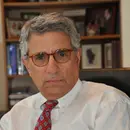
Peter Kowey, MD Profile Photo

Author, Professor

Dr. Kowey is Professor of Medicine and Clinical Pharmacology at Thomas Jefferson University, Emeritus Chief of the Division of Cardiovascular Diseases at the Lankenau Heart Institute, and the William Wikoff Smith Chair in Cardiovascular Research at the Lankenau Institute for Medical Research.
Dr. Kowey is an internationally recognized expert in heart rhythm disorders. His research, regulatory and clinical trial expertise have led to the development of innovative therapies for cardiac arrhythmias. Dr Kowey is the recipient of over 150 grants, has written over 450 papers and scientific reports, and has co-edited 5 textbooks on cardiac arrhythmia. He has trained hundreds of fellows who practice cardiology and cardiac electrophysiology around the world.
Dr. Kowey is a Fellow of the American Heart Association, the American College of Cardiology, the American College of Physicians and the Heart Rhythm Society and several other professional organizations. He was a member of the Cardio-Renal Drug Advisory Committee and the Cardiovascular Devices Advisory Committee of the Food and Drug Administration. Dr. Kowey has been the recipient of numerous awards including the Edward S. Cooper Award from the American Heart Association, and the William Osler Award from the University of Miami.
Dr. Kowey is a graduate of St. Joseph’s University and the University of Pennsylvania School of Medicine. He completed his residency training in internal medicine at Penn State University and was a fellow in cardiovascular medicine and research at the Harvard University School of Public Heal…Read More